Tree work in Streetsboro is never just about chainsaws, ropes, and wood chips. The weather has a vote in every job. Anyone who has tried to plan a tree removal or large-scale tree trimming in northeast Ohio knows how fast a clear forecast can turn into sideways rain, lake effect snow, or gusts strong enough to knock over traffic cones.
If you are coordinating tree service in Streetsboro, especially with a company like Maple Ridge Tree Care, understanding how local weather patterns shape the work schedule will save you time, frustration, and sometimes a fair bit of money. It also keeps you and your property safer, because weather is one of the biggest risk factors that professionals watch when they decide whether to proceed, delay, or change tactics.
What follows is a practical look at how our regional climate affects tree removal and tree trimming, broken down by season and by weather type, with some detail on how experienced crews actually make decisions in the field.
Streetsboro’s climate and what it means for tree work
Streetsboro sits in that not-quite-lakefront, not-quite-inland band where we get a little bit of everything. Winters swing from mild to brutal, spring often mixes warm spells with sudden cold snaps and heavy rain, summers bring humidity and thunderstorms, and fall can lean hot one year and early freeze the next.
For tree service, the key factors are not just temperature, but:
- Wind speed and gusts Soil moisture and ground firmness Precipitation type and intensity Ice and snow load on branches Duration of daylight
Each of these can speed work up, slow it down, or even make certain tree removal methods impossible on a given day.
I have seen days where a job that looked straightforward on paper turned into a half-day delay because a clay yard turned into a soup of mud after overnight rain, and our trucks would have left ruts deep enough to bury a boot. Other times, a surprise sunny window in late January made it perfect for crane-assisted removals, because frozen ground supported heavy equipment beautifully.
How different weather conditions change the plan
Professional crews do not cancel at the first sign of a cloud. Most reputable tree service companies, including tree service Maple Ridge Tree Care, plan for a range of conditions and work around them whenever it is safe. The risk threshold changes once you start putting climbers in the canopy, operating cranes, or rigging large pieces of wood over homes and power lines.
Wind
Wind is usually the number one factor for safety. A bit of steady breeze is fine, but gusts create sudden, unpredictable movement in trees, ropes, and cut sections of trunk. Common practical thresholds look like this, although specific numbers vary by crew and job:
Climbing and bucket work often pause when sustained winds move into the 20 to 25 mph range, especially if gusts spike higher. If you are removing a dead or structurally unsound tree, the margin for error gets smaller, so crews may be even more conservative.
Crane operations are typically limited at lower wind speeds than climbing, sometimes in the 15 to 20 mph range, because crane booms and suspended loads behave badly in gusts. Responsible crane operators will refuse a pick if the wind risk feels wrong, even if the customer is eager to get the job done.
Ground work, like cutting logs already on the ground or chipping brush, may continue safely in wind that is too risky for climbing. So your appointment might not be cancelled entirely, but the high work might be moved to another day.
Rain
Light to moderate rain often does not stop tree removal in Streetsboro. What matters more is what the rain does to footing, equipment, and visibility.
Wet bark and climbing gear reduce friction, which means climbers have to move slower and rely even more on redundant safety measures. Heavy rain reduces visibility for the person running the saw in the tree and the crew on the ground spotting from below.
The other big issue is turf and soil. If a customer has a beautifully manicured lawn, a responsible tree service in Streetsboro will think twice about driving heavy trucks, chipper, or stump grinder across saturated ground. Many homeowners are fine with a few ruts, but others absolutely are not, and clearing that up ahead of time avoids angry calls later.
For that reason, it is common for companies to reschedule tree work after multi day rain events, even if the new day is technically dry. The ground needs time to firm up so trucks, cranes, and loaders can move safely without tearing up the property or getting stuck.
Snow and ice
Winter is one of the best times for large tree removal in Streetsboro, but only within certain weather windows.
Snow itself is usually manageable. Crews shovel out work areas, flag hazards that are hidden by snow, and proceed with caution. What causes problems is ice. Ice on branches changes weight distribution and makes them more brittle and unpredictable when cut. Ice on climbing gear, ladders, and bucket truck platforms turns every step into a slip hazard.
I remember a job where overnight freezing rain coated a large oak in clear ice. From the ground it looked gorgeous, but every limb had become a crystal-covered spear. We delayed the job not because the tree might fail on its own, but because a climber moving around that canopy would face constant risk of slipping or being struck by heavy, icy shards when pieces were cut loose.
Frozen ground, on the other hand, is often helpful. It supports heavy trucks and cranes, prevents ruts, and protects roots of nearby trees from compaction. Many larger tree removal Streetsboro projects are purposely scheduled for mid winter for this reason.
Heat and thunderstorms
Summer tree work has its own set of scheduling quirks. Heat and humidity are more of a crew health issue than a mechanical one. Crews will often start earlier, take more breaks, and move certain heavy tasks to morning hours. This can stretch out the time a project takes, particularly large removals or jobs with difficult access.
Thunderstorms, especially fast building afternoon storms, are another story. Lightning is an absolute risk stopper. Nobody responsible sends a climber up a 60 foot maple when there is an active thunderstorm nearby. Even if lightning is not yet overhead, incoming storms bring strong, fast gusts that can whip branches and pendulum rigged pieces in ways that are impossible to fully control.
It is common in July and August to have jobs paused mid day, crews retreat to the trucks while Discover more here storms pass, then resume later once radar shows a clear gap. That start and stop pattern means a job that would have taken 6 continuous hours on a mild day might stretch across the entire day, or spill into the next morning.
Seasonal patterns: when tree removal usually moves fastest
While weather on any specific date can surprise you, certain seasonal patterns show up year after year. If you are trying to plan a significant tree service project around Streetsboro, it helps to think in terms of windows rather than exact days.
Late winter and early spring
From roughly February into early April, tree removal in Streetsboro often moves quickly when conditions line up. Trees are leafless, so there is less weight in the canopy and better visibility for climbers. Frozen or semi frozen ground supports equipment, and many residents have not yet fully booked landscapers or outdoor projects, so scheduling can be a bit more flexible.
On the other hand, late winter also brings snow events, ice, and the occasional deep freeze. When temperatures swing wildly, you get those days where the morning starts at 20 degrees with icy driveways and warms to 45 by afternoon, turning everything to slush.
Tree trimming of live branches is somewhat more nuanced during this time. Certain species prefer pruning when fully dormant, others tolerate late winter work just fine. A good Streetsboro tree service will time pruning for tree health first, and customer convenience second.
Late spring and early summer
From late April into June, demand for tree service in Streetsboro jumps sharply. People walk their yard, notice dead limbs over the driveway, or decide that large silver maple has finally outgrown the patio. The weather often cooperates, but spring storms also start breaking weak branches and taking down compromised trees.
This shoulder season is excellent for:
Tree trimming that focuses on structure and clearance.
Corrective pruning on trees that show winter damage.
Removals of trees identified as hazardous before summer storm season peaks.
The downside is that schedules start to fill. If you call in May for tree removal, you might be looking at a 2 to 4 week wait, longer if you want a specific date and time and your job is not an emergency.
High summer
July and August bring heat, thunderstorms, and, often, very full calendars. The trees are in full leaf, which means more weight in every branch and a more complex canopy for climbers to navigate. Rigging has to account for extra sail area in the foliage when wind picks up.
This period sees a lot of storm tree service damage work. Emergency calls for split trunks, uprooted trees, or broken limbs hanging over houses jump to the front of the line. If you have a non urgent tree trimming request during a week of heavy storms, expect your slot to slide to make room for storm hazards.
On the positive side, long daylight hours give crews more flexibility. A job that could not safely start at 3 p.m. In November can begin midafternoon and still be finished before dark in July.
Fall
September and October are popular months for tree work. The nights cool off, humidity drops, and people start thinking about winter. This is a great time to:
Remove dead or high risk trees before snow and ice loads hit.
Thin crowns and lift low limbs for better clearance from roofs and gutters.
Address trees that are rubbing on siding or interfering with walkways and driveways.
Fall is also busy for removals of ash trees and other species that have declined over the summer. The tree may still hold some leaves, but structural integrity has gone, and winter storms will only accelerate the decline.
Once leaves start dropping in earnest, visibility and access improve, but piles of leaves can hide small stumps, rocks, and other obstacles. Experienced crews take time to clear work zones carefully, especially when running stump grinders.
Deep winter
From December into early February, work does not stop. Many Streetsboro tree services operate year round. Winter can actually be the most efficient season for large removals when the ground is frozen and the canopy is bare.
The tradeoff is that weather swings matter more. Extended cold snaps can stiffen hydraulic lines and slow equipment. Snow and ice events may cause postponements. Customers also sometimes need extra time to clear driveways for trucks and equipment.
This is also when companies often bundle jobs that require cranes or specialized equipment, coordinating several large removals on the same day to make best use of the setup.
How weather affects your specific service type
The weather impact is not the same for every type of tree work. If you are booking a job, it helps to know which ones are most sensitive.
Hazard and emergency removals
When a tree is on a house, blocking a main driveway, or tangled in live wires, it becomes priority work. Weather matters, but the urgency often pushes crews to find narrow safe windows rather than waiting days for perfect conditions.
In high wind or lightning, even emergency jobs may be paused. Crews will stabilize the scene as best they can, cordon off the danger area, and return when it is safe to proceed. The schedule for everyone else that day is likely to be affected, as emergency calls bump routine trimming or lower priority removals.
Planned removals
For non urgent removals, weather plays a larger role in timing. Crews will be more willing to reschedule if conditions are marginal, because there is no immediate risk to life or property.
If a crane is required, expect the company to be even more conservative about wind, ground conditions, and visibility. Crane day is often the most tightly coordinated part of a multi job schedule. A change in weather the night before can trigger a full reshuffle. It is frustrating when that happens, but it is usually the only responsible choice.
Tree trimming and pruning
Tree trimming in Streetsboro often has more flexibility than removals from a safety standpoint, because the pieces being cut are usually smaller and easier to control. Still, aggressive wind, heavy rain, or icy conditions are likely to delay canopy work.
Tree health timing also matters. For example, many species are best pruned when dormant, while others should not be pruned in the heart of summer heat or during periods when certain pests are active. An experienced arborist will work around not just the weather, but the biology of the tree.
Stump grinding
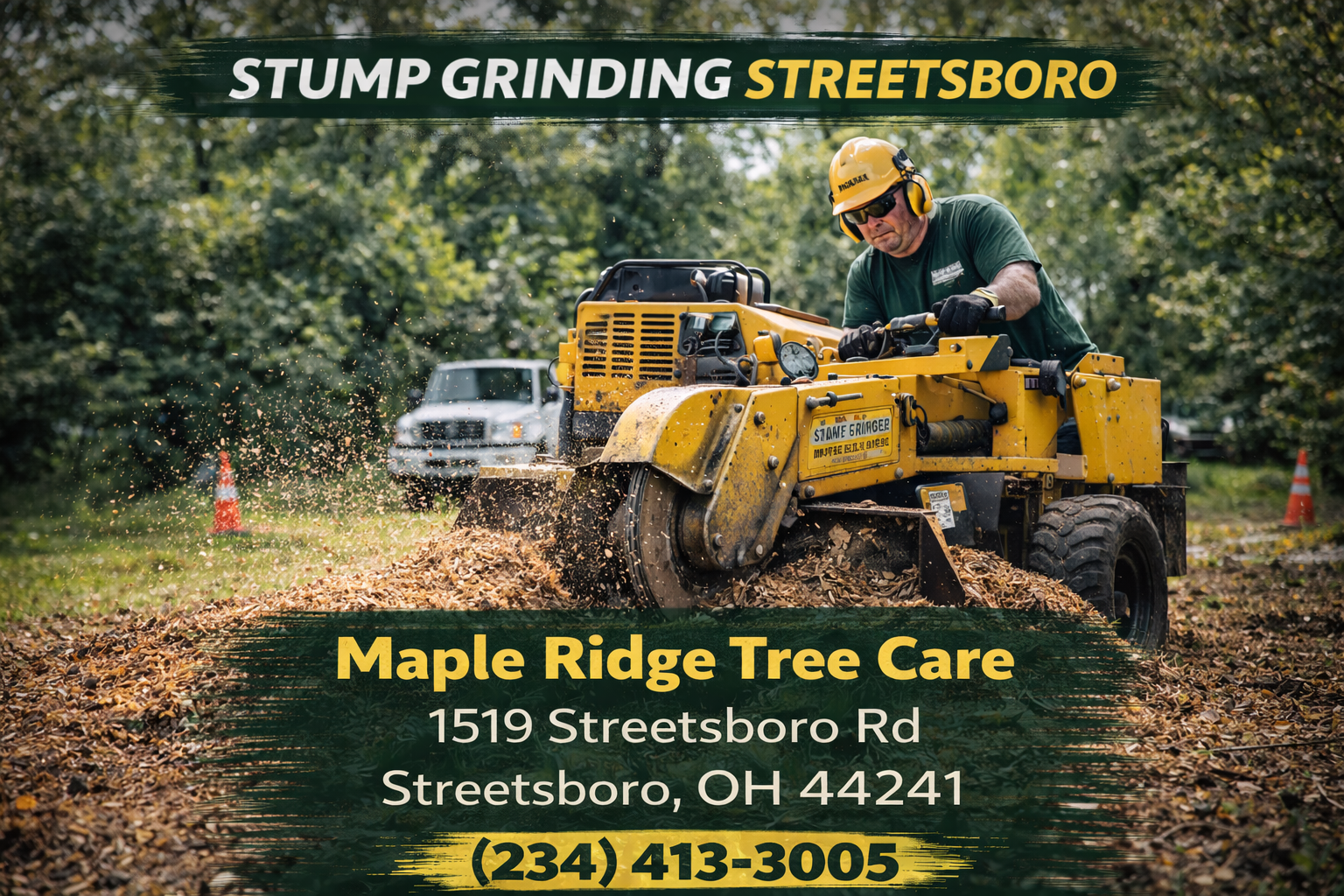
Of all services, stump grinding is most limited by soil conditions and underground hazards rather than wind or light rain. Very soft soil can let the machine sink, throwing off its level and risking an uneven grind or damage to underground utilities.
Frozen ground can be a mixed bag. Lightly frozen turf can help support equipment, but deep frozen soil with a solid frost line can make it much slower to grind out a stump, especially on large diameter, deeply rooted species.
When a responsible tree service will recommend rescheduling
Customers sometimes worry they are being put off when a crew suggests waiting a day or two. In almost every case, that suggestion comes from a combination of safety concerns, property protection, and experience.
Here are common weather driven reasons a Streetsboro tree service, such as Maple Ridge Tree Care, might advise delaying:
Sustained wind approaching or exceeding safe climbing or crane operation limits. Heavy rain or soaked ground where equipment access is needed close to the home. Active thunderstorms in the area, especially with lightning alerts. Fresh ice accumulation on branches, roads, or equipment contact points. Deep snow, especially when it hides key obstacles, drop zones, or septic and utility locations.If you hear one of these explanations, it generally means the crew is giving up a productive day to avoid compromising safety or tearing up your yard. That is the type of decision you want from a contractor working on large trees above your home.
What homeowners can do to plan around Streetsboro weather
You cannot control the forecast, but you can set yourself up for smoother scheduling and fewer surprises.
First, be honest with yourself about urgency. A dead ash leaning over your garage is not the same as a healthy maple dropping acorns on your driveway. Explain the situation clearly when you contact a tree service in Streetsboro. If they understand the risk level and your time constraints, they can prioritize appropriately.
Second, build in some flexibility. Instead of insisting on one specific day, consider a 2 to 3 day window. Many companies will pencil you in with a primary date and a backup, especially during volatile weather seasons like early spring or mid summer storm periods.
Third, prepare your property. Clear driveways, move vehicles, and, if possible, mark underground utilities, sprinkler heads, or septic lines before the crew arrives. This allows them to adjust their setup quickly if rain the night before changes where they can safely drive or place equipment.
Finally, stay in communication. A reputable service will reach out if they see an issue with the forecast. Responding quickly to confirm rescheduling times helps keep your job near the front of the queue, instead of drifting behind more urgent work.
Why local experience matters for Streetsboro weather
Tree removal is not the same in every region. Crews working daily in and around Streetsboro build a practical sense for how local soil types handle saturation, how different neighborhoods expose trees to wind, and how nearby wooded areas funnel gusts during storms.
Heavy clay backyards that turn to slick mud after rain, older neighborhoods with compacted subsoil, and newer developments with fresh fill all behave differently under truck tires and outrigger pads. A company familiar with these patterns can often adjust plans on the fly in ways that keep the job on track without sacrificing safety.
Local knowledge also matters for tree species. Norway maples, silver maples, ash, and certain ornamental pears all respond to wind, ice, and pruning in their own ways. Recognizing how a specific species tends to fail under weather stress helps crews prioritize which trees to tackle first when forecasts turn rough.
When you call a tree service in Streetsboro, asking how they handle weather delays is a fair question. The best answers are specific and practical, not vague promises that they work “rain or shine” no matter what. Flexibility tied to clear safety standards is a good sign that the crew knows what they are doing.
Balancing your schedule with the weather’s schedule
Tree work sits at the intersection of biology, physics, and the very real constraints of living in northeast Ohio’s mixed climate. No one can promise that a tree removal Streetsboro project will land perfectly on a date picked months in advance. The weather has too much to say about wind, ground conditions, and safe working windows.
What you can do is choose a company that respects those constraints, uses local experience to work around them, and keeps you informed when the plan needs to shift. When a crew decides to pause for gusty winds or delay to protect your yard from heavy trucks on soaked soil, they are trading some short term schedule convenience for long term safety and property health.
That balance is at the heart of good tree service. Weather will keep shaping that balance in Streetsboro, whether your project is a simple tree trimming job over the driveway or a complex crane assisted removal beside your house. The more you understand how those decisions are made, the easier it becomes to work with the forecasts, not against them.